
3D Solar Eclipse Glasses - Combining Safety with Stunning Views

 A solar eclipse is a rare and awe-inspiring event—but it's not one to enjoy carelessly. The Sun’s intense ultraviolet (UV) and infrared (IR) rays can inflict immediate, irreversible damage to your eyes, even when the Sun is partially obscured. The only safe way to view a solar eclipse—outside of totality—is by using ISO 12312-2 certified solar eclipse glasses 
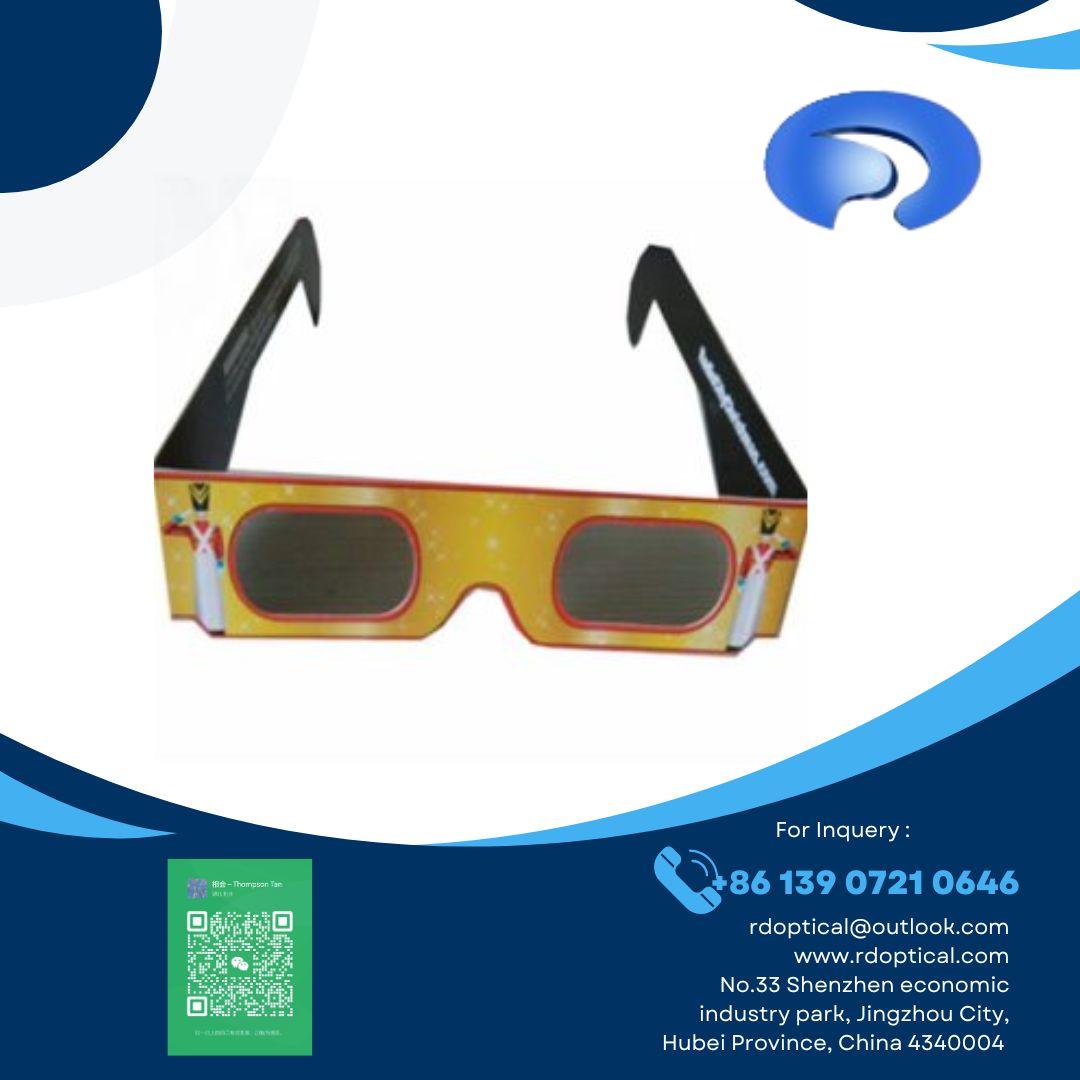
3dsolareclipseglassesrdopticalcom.jpg

What Makes 3D Solar Eclipse Glasses Stand Out?

Ever noticed how eclipse glasses resemble classic 3D movie glasses? The similarity isn’t just visual—they share the science of immersive viewing:

  • Superior Eye Protection
    These glasses use highly specialized solar filters—much darker than sunglasses—to block harmful UV, IR, and an overwhelming amount of visible light. They meet or exceed the ISO 12312-2 standard, ensuring safe viewing throughout all eclipse phases .

  • Enhanced Viewing Quality
    With a high optical density (typically OD 5 or greater), these lenses produce crisp, striking images of the Sun with rich, natural hues—often an elegant orange—making the sight both safer and more vivid .

  • Simple, User-Friendly Design
    Similar in form to retro 3D glasses, they’re easy to don, lightweight, and widely accessible—great even for first-time eclipse watchers.

Safety Comes First: What Experts Say

  • NASA and professional bodies stress that, unless under full totality, even brief glances at the Sun without certified protection can damage your eyes permanently .

  • Optometrists and the American Optometric Association reinforce this, advising the exclusive use of ISO-certified viewers and highlighting that typical sunglasses—even very dark ones—offer no protection .

  • Experts also warn against counterfeit eclipse glasses and stress buying only from reputable vendors with verifiable ISO/CE certification.

Choosing the Right Pair: What to Look For

  1. ISO 12312-2 Certification — It’s essential.

  2. Undamaged Filters — Discard glasses that are scratched, dented, or worn .

  3. Clear Safety Info — Frames should have explicit warnings and instructions printed on them—no vague labels.

  4. Avoid Optical Devices Without Filters — Even with eclipse glasses, viewing through cameras, binoculars, or telescopes without dedicated solar filters is dangerous .

  5. Supervise Kids — Ensure they're wearing intact and ISO-certified glasses and keep an eye on their usage .

When totality occurs (only during a total eclipse), you may briefly remove eyewear—but only if you're in the path of 100% totality, and only for that fleeting moment .

Why Purchase from rdoptical.com?

At rdoptical.com, you’ll find a curated selection of ISO-certified 3D solar eclipse glasses designed to balance safety and style. Whether you're looking for sleek, comfortable frames or bulk options for events, they deliver both quality and peace of mind.

Comments

Popular posts from this blog

Enhance Your Fireworks Experience with 3D Glasses: Explore the Magic at Rdoptical.com

 Fireworks are a universal symbol of celebration, lighting up the night sky with dazzling colors and patterns. But what if you could elevate this mesmerizing experience even further? With 3D Fireworks Glasses from Rdoptical.com , you can transform every firework show into a breathtaking spectacle of depth and dimension. What Are 3D Fireworks Glasses? 3D Fireworks Glasses are specially designed eyewear that enhances the visual effects of fireworks, creating stunning 3D illusions and patterns. These glasses use diffraction lens technology to transform ordinary light sources into extraordinary visual displays, adding a new layer of wonder to fireworks shows, holiday celebrations, and events. How Do They Work? The secret lies in the advanced diffraction technology embedded in the lenses. When you wear these glasses, light from fireworks or other bright sources is refracted, creating vibrant rainbows, starbursts, and intricate 3D patterns. Each burst of light becomes a multidimen...

Linear Polarized Glass Price & Features – Get the Best 3D Viewing Experience at RDOptical.com

Linear polarized 3D glasses have revolutionized the way we experience 3D visuals in cinemas, home theaters, and educational applications. Unlike traditional anaglyph glasses, which rely on color separation, linear polarized glasses use advanced polarization technology to create a stunning and immersive 3D experience. RDOptical.com offers premium-quality linear polarized 3D glasses at competitive prices, ensuring an enhanced viewing experience for users worldwide. Understanding the Price of Linear Polarized Glasses The price of linear polarized 3D glasses varies depending on several factors, including lens quality, frame material, and bulk purchasing options. Generally, these glasses are available in a price range of $1 to $10 per pair for basic models, while high-end versions with better lens clarity and durability may cost more. RDOptical.com provides cost-effective options for both individuals and businesses looking to buy in bulk. Factors Affecting the Price: Lens Technology: ...

Trusted Circular Polarized Glasses for Precision Viewing

 In today’s world of advanced optical technology, Circular Polarized Glasses have become a necessity for applications requiring precision viewing. Whether you’re watching a 3D movie, working in a specialized optical environment, or engaging in high-performance activities, having high-quality circular polarized lenses can make a significant difference. At RDOptical , we provide superior circular polarized glasses designed to enhance visual clarity, reduce glare, and ensure an immersive viewing experience. What Are Circular Polarized Glasses? Circular polarized glasses are equipped with specialized lenses that filter out unwanted reflections and control the direction of light waves. Unlike linear polarized glasses, which only block light at a specific angle, circular polarized lenses allow for better viewing angles and greater image clarity. This makes them an excellent choice for: 3D movie viewing Virtual reality (VR) applications Photography and optical measurements ...