Circularly polarized 3D glasses are a key technology behind immersive 3D movie experiences in modern cinemas. Unlike older 3D systems that could cause eye strain or limit head movement, circular polarization allows viewers to enjoy realistic depth and comfort from almost any viewing angle. Here’s a clear explanation of how they work and why they’re so effective.
Understanding Polarization in Simple Terms
Light waves vibrate in many directions. Polarization is the process of filtering these vibrations so that light waves move in a controlled pattern. In 3D technology, polarization is used to ensure that each eye receives a slightly different image. The brain then combines these two images to create the perception of depth.
What Is Circular Polarization?
Circular polarization is a special form of polarization where light waves rotate in a circular motion as they travel. This rotation can be either clockwise (right-handed) or counterclockwise (left-handed). Circularly polarized 3D systems use this difference to separate images for the left and right eyes.
How Circularly Polarized 3D Glasses Create the 3D Effect
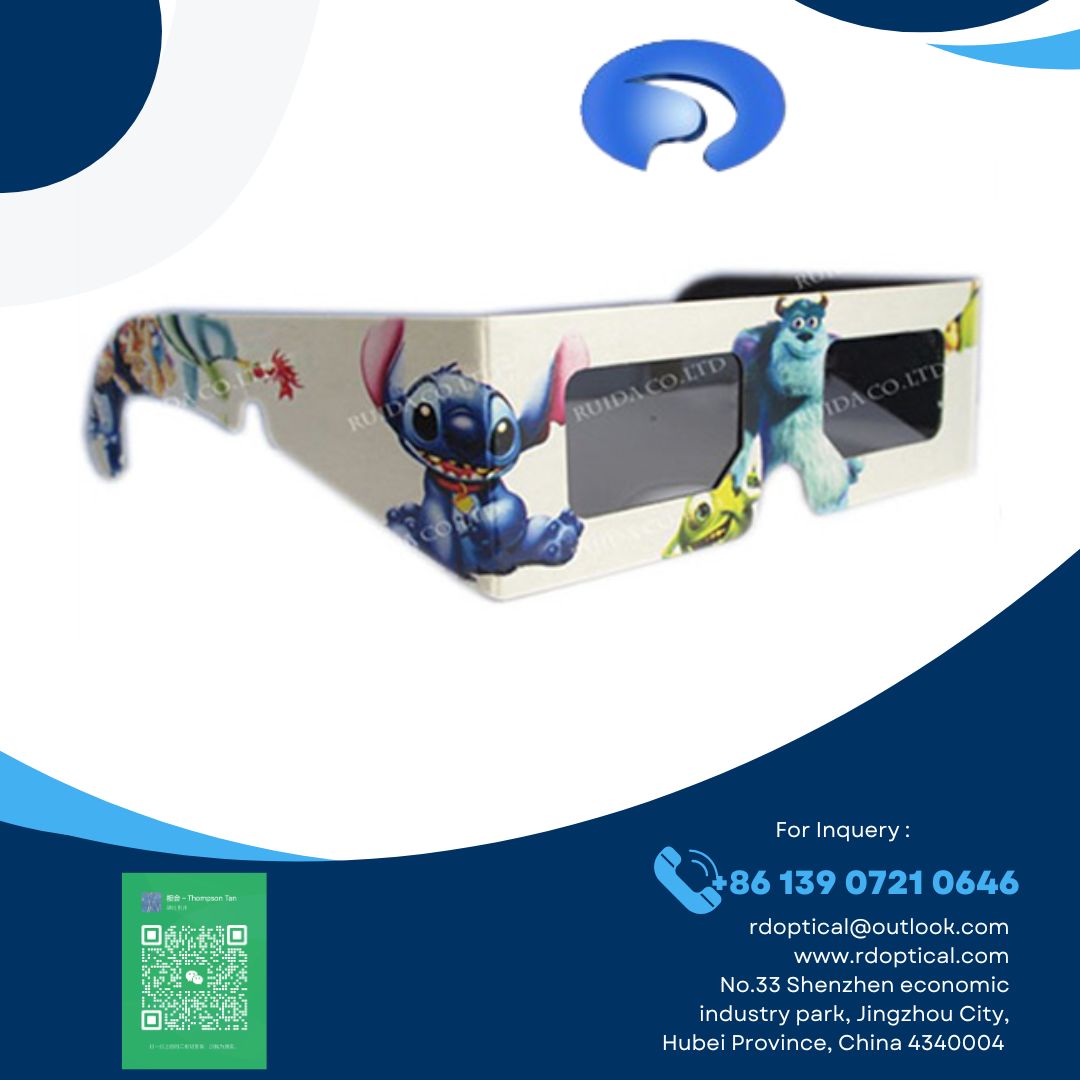
-
Two Images Are Projected
A 3D projector displays two versions of the same scene at the same time. One image is circularly polarized clockwise, and the other is polarized counterclockwise. -
Glasses Filter Each Image
Circularly polarized 3D glasses have lenses designed to match these rotations. The left lens allows only one direction of circularly polarized light to pass through, while the right lens allows the opposite direction. -
Each Eye Sees a Different View
Because each eye receives a slightly different image, the brain interprets the difference as depth, creating a realistic 3D effect. -
Natural Depth Perception
The brain merges the two images seamlessly, resulting in smooth, comfortable 3D visuals.
Why Circular Polarization Is Better Than Linear Polarization
Circularly polarized 3D glasses offer several advantages over linear polarized glasses:
-
Freedom of Head Movement: You can tilt your head without losing the 3D effect.
-
Reduced Eye Strain: Smoother image separation leads to more comfortable viewing.
-
Wider Viewing Angles: Ideal for large cinema screens and home theaters.
-
Lightweight and Passive: No batteries or electronics are required.
Where Are Circularly Polarized 3D Glasses Used?
Circularly polarized 3D glasses are commonly used in:
-
Modern movie theaters (such as RealD 3D systems)
-
Theme park attractions
-
Museums and educational displays
-
Large-format presentations and simulations
Are There Any Limitations?
While highly effective, circularly polarized 3D systems require:
-
Special silver screens to maintain polarization
-
Slightly reduced brightness compared to standard 2D projection
-
Proper alignment of projection equipment for optimal results
Conclusion
Circularly polarized glasses work by filtering rotating light waves so that each eye receives a unique image. This clever use of light polarization allows the brain to create a vivid sense of depth while giving viewers the freedom to move naturally. Thanks to their comfort, simplicity, and effectiveness, circularly polarized 3D glasses remain one of the most popular technologies for delivering high-quality 3D experiences.
Comments
Post a Comment